Civil society conditions in Russia: Legal changes in 2025
In 2025, important changes were introduced into Russian legislation, tightening the requirements for foreign agents, as well as other changes aimed at strengthening the responsibility of citizens and reducing their rights and freedoms.
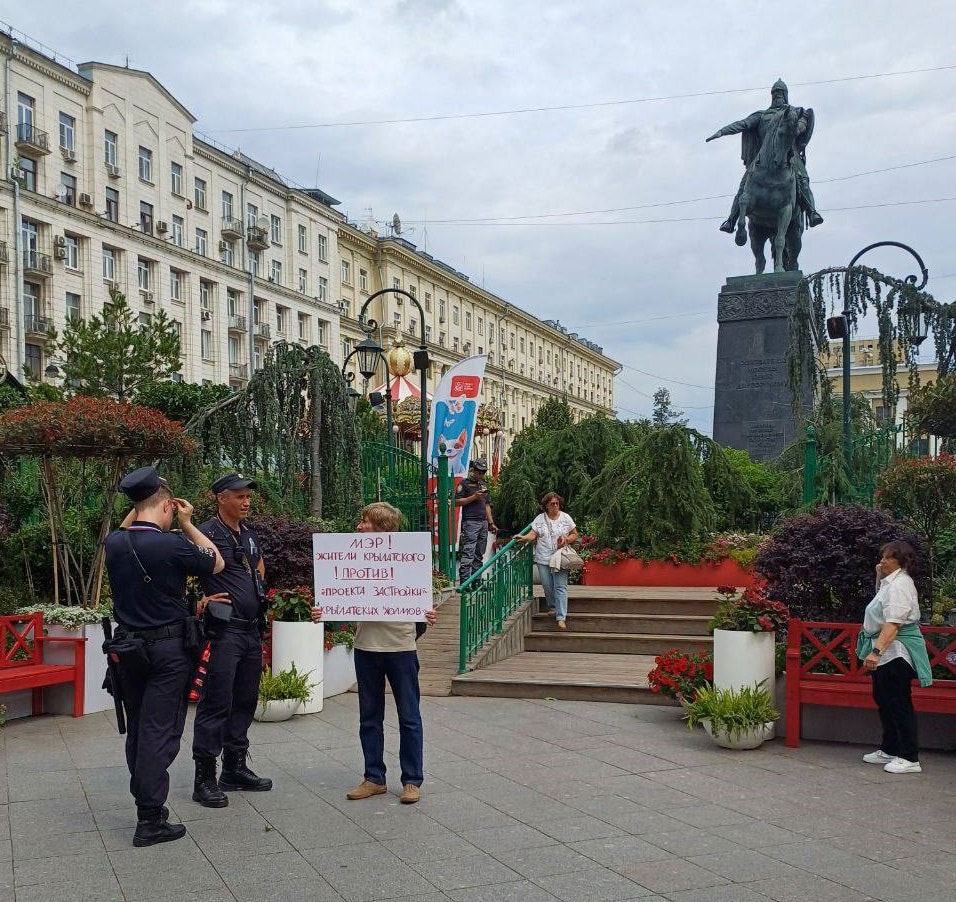 Main: Let’s Protect Krylatskie Hills
Protest against the development of Krylatskie Hills Park.
The changes are not very large compared to other years, but the law is stricter than before. The authorities’ idea seems to be having more control and to scare people, for example connecting the use of VPN to extremism. Since VPN is necessary to access information that contradicts the authorities, the regime is making it clear that looking for such alternative information, or using VPN at all, comes with a cost. Also in 2025, authorities gained enhanced control, and more information was gathered and shared with the authorities. In addition to contributing to fear, this paves the way for even stricter legislation later.
Below, we list the main legal changes affecting civil society, and link to the law itself. Not all activists will be directly affected by each of these changes, but nevertheless the legal changes contribute to shrinking the space for operating.
When speaking of legal changes, it is worth noticing that the changes in environmental law in 2025 are more substantial than last year. For instance, a change in the economic mechanism supporting environment, namely payment for negative impact.
Read more:
Fact box:
Russian authorities are afraid of alternative views and groups or individual activists that work for change, also if these don’t consider themselves «political» but work on limited issues such as maintaining a park or preventing oil spills. To combat such groups and individuals and hinder that they gain support, labels are used extensively.
Foreign agent: Russian organisation or individual person. The label was previously used to hinder NGOs working with foreign aid, now used for persons or groups that are seen to express views contrary to the authorities. The Russian Ministry of Justice maintain a unified register of foreign agents, as well as a register of individuals affiliated with foreign agents.
Extremist organisation: Russian organisations can be labelled after a court ruling. While a foreign agent can continue its operation under restrictions, the extremist label mean that all activity is strictly prohibited and criminalised. For instance, the Nobel Peace Prize-winning human rights group Memorial was declared an extremist organisation in April 2026.
Undesirable organisation: Used to hinder foreign and international organisations, by making it criminal and punishable for Russian citizens to have contact with these. The label can be provided administratively, without court ruling. For instance, the Norwegian Helsinki committee, Bellona and NU are labelled undesirable.
1. New rules on financial aspects of «foreign agents»
This concerns financial restrictions and property rights. The changes further marginalize «foreign agents» by controlling their financial assets and property. From before, it was professional restrictions, meaning there were certain jobs that a «foreign agent» could not have. Also, there were no financial restrictions. Now you can still sell property and be part of commercial activity, but it must be more transparent to the state, e.g. you need to open a special account. Furthermore, individual «foreign agents» must inform all their financial counterparts about their «foreign agent» status, and all money must be sent to this special designated account. The financial counterparts have no such obligation.
Changes in Article 9 of the Law – New additional restrictions of the rights of Russian citizens designated as foreign agents were added to the existing Russian legislation. Thus, the foreign agent is required to inform about this status to any person who, in accordance with the Law or the contract, are obliged to make payments due to that individual. Such payments may arise from the alienation of real estate and (or) vehicles, from their lease, remuneration and other payments (including penalties (fines, late fees) and other financial sanctions) related to the exercise or transfer of the exclusive right to intellectual property or means of individualization, as well as income in the form of interest on bank deposits (account balances) or from equity participation in organisations (including dividends).
In addition, a person designated as a foreign agent is obliged to use a special ruble account opened with an authorized bank. This, including the specific procedures governing the deposit and withdrawal of funds, is established by the decision of the Board of Directors of the Central Bank of the Russian Federation. Only one special account may be opened in the name of a person designated as a foreign agent.
A foreign agent may receive funds from the transfer or lease of ownership of real estate and/or vehicles, remuneration and other payments (including penalties, fines, late fees, and other financial sanctions) related to the exercise or transfer of exclusive rights to intellectual property or means of individualization, and income in the form of interest on bank deposits (account balances) or from equity participation in organisations (including dividends), only by crediting them to this special account.
2. «Foreign agents» and international organisations
This change constitutes an additional reason for being labelled as a «foreign agent». If you participate in the implementation of an international agreement or organisation.
Part 6 of Article 4 of the Law was supplemented with Clause 1.1, which allows a citizen or organisation to be designated as a foreign agent on an additional basis, namely, assisting in the execution of decisions of international organisations in which the Russian Federation does not participate, or foreign state bodies, if such actions directed against the security of the Russian Federation (from April 21, 2025).
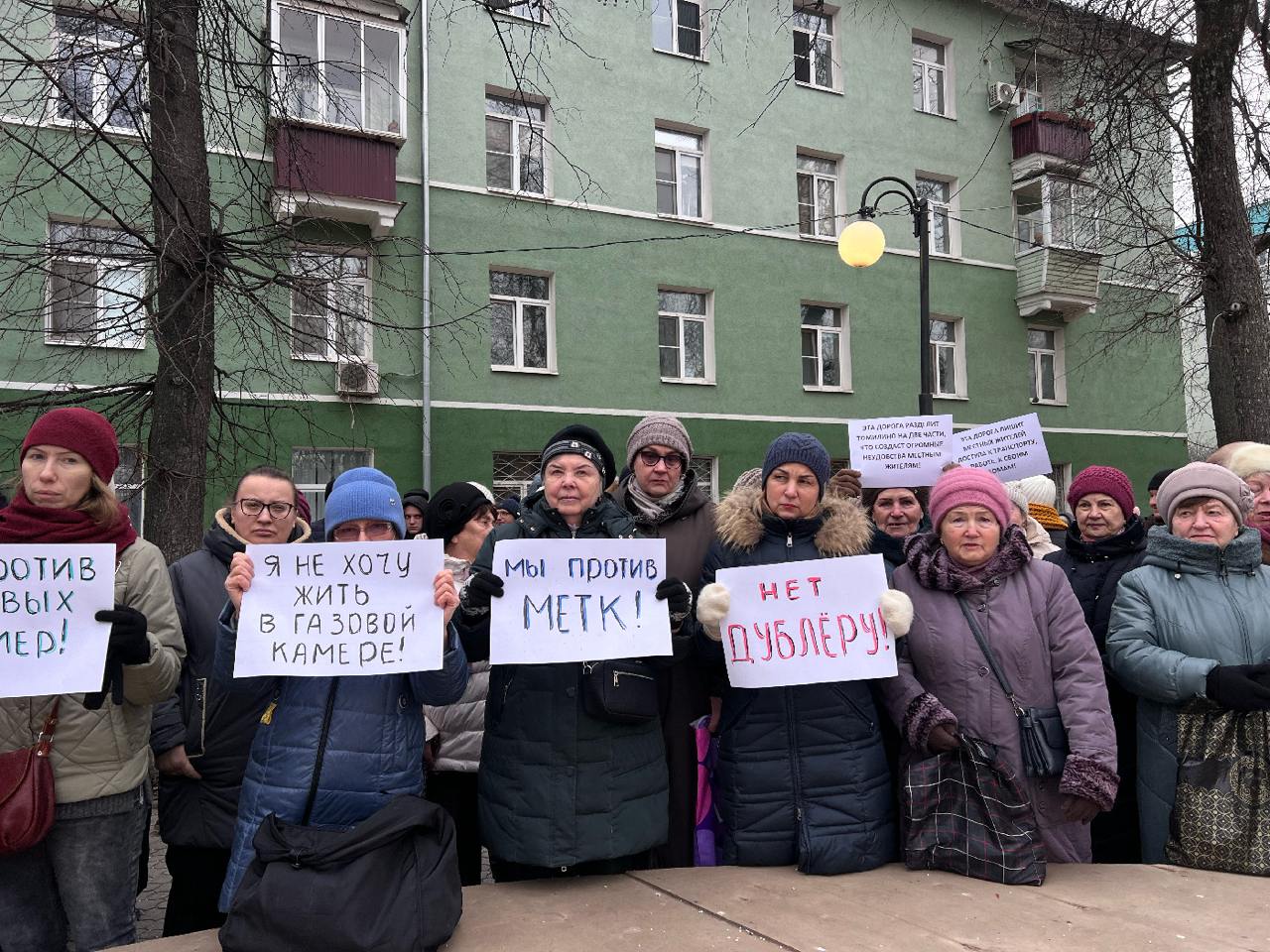 Eco-Defense Moscow Region
3. Several changes in the criminal legislation regarding information storage and handling
These changes consider restrictions on information and data. The government wants to control everything, such as making sure that you cannot pass your sim-card to someone else, making it easier to track people, etc.
It can also be noted that the powers of the Federal Security Service (FSB) are being expanded. From April 1, 2026, the agency is entitled to request, free of charge, copies of databases (or part of them) from any person, including by obtaining remote access to them. The law was passed in 2025, and the change is active from 1st of April 2026.
As of January 1, 2025, Article 272.1 was incorporated into the Criminal Code of the Russian Federation, providing for liability for the illegal use and (or) transfer (distribution, provision, access), collection and (or) storage of computer information containing personal data obtained by unlawful access to systems for its processing, storage or other interference in their functioning or by other illegal means.
On July 31, 2025, amendments were introduced to the Criminal Code of the Russian Federation, providing for criminal liability for:
– Illegal use of the subscriber traffic gateway terminal or a virtual telephone exchange, or the facilitation of the operation of the subscriber traffic gateway terminal or its main components, committed with the intent to perpetrate another crime or entailing grave consequences (new Article 274.3);
- Organisation of activities involving the transmission of subscriber numbers allocated to persons on the basis of contracts for the provision of mobile radiotelephone services or provided for use under these contracts to other persons in violation of the requirements of the legislation of the Russian Federation, if these acts are committed out of selfish interest or in order to commit another crime (new article 274.4);
– Organisation of activities involving the transmission of information necessary for registration and (or) authorization of the Internet user to gain access to the functionalities of the information resource to other persons, if these acts are committed for personal gain or with the intent to commit another crime (new article 274.5).
4. Clarifications on criminalisation of cooperation with an Extremist organisation
Clarifications were made to the law, so it is now unlawful to participate in activities by an extremist organisation. For instance, if you are in their social media chat. Previously, it was unlawful to organise such activities, but with this clarification now also merely participation is unlawful. It should be noted that participation in activities of a terrorist organisation is punishable under another article of the criminal code, and was already prohibited.
The Article 282.2 of the Criminal Code of the Russian Federation was clarified. Previously, this article imposed liability for the acts of organizing the operation of an extremist organisation. As of July 23, 2025, it was expanded to include participation in the activities of such an organisation. It should be noted that participation in the activities of a terrorist organisation is punishable under another article of the Criminal Code of the Russian Federation (205.4).
 Eco-Defense Moscow Region
5. Changes in criminalisation of cooperation with an Undesirable organisation
With this change, it is shorter between an administrative violation and criminal charges. Previously, you needed two administrative violations to get charged. Now you will be charged after only one administrative violation.
It should also be noted that the Ministry of Justice of Russia maintains a list of foreign and international non-governmental organisations whose activities are recognized as undesirable on the territory of the Russian Federation (currently numbering 342). Cooperation with such organisations is initially subject to administrative liability (Article 20.33 of the Code of Administrative Offenses of the Russian Federation) and may subsequently entail criminal liability (Article 284.1 of the Criminal Code of the Russian Federation).
6. Changes in VPN laws, tighter regulations on tools to bypass blocking measures
There are legislation changes on use of VPN, a tool used to bypass blocking measures on the internet. The changes will make it more difficult to get information that opposes the regime. Both spreading and receiving such information will be more difficult. Searching for or viewing extremist materials risk high fines. If being prosecuted in another case, the use of VPN will be considered additional. Also, VPN services should have special registration and block prohibited websites. Promoting VPN services can be punishable. It should be noted that these changes affect the civil society and freedom of information in two ways: not just the limiting rules in themselves, but also by making VPN seem connected to extremism and connected to suspicious activities.
The regulations of the use of tools to bypass blocking measures were tightened. The law on VPN in Russia 2025 (No. 281-FZ of July 31, 2025) was adopted by the Federal Assembly of the Russian Federation, signed by the President of Russia and officially entered into force on 1 September 2025.
1. Individuals who search for or view extremist materials on the Internet may now be subject to fines of up to 5,000 rubles.
2. The use of tools to circumvent blocking measures will be considered an aggravating circumstance for other offenses. For example, under the Art. 63 of the Criminal Code of the Russian Federation, the use of a VPN when committing a crime is considered an aggravating circumstance, and, consequently, entails more severe liability.
3. Services for circumventing restrictions will be obliged to connect to a special register and block prohibited websites, otherwise they will be fined up to 500,000 rubles.
4. Advertising of tools designed to circumvent blocking measures is also subject to fines of up to 500,000 rubles.
In addition, it is no longer permitted to transfer SIM cards and login credentials to other persons, which also prohibits the purchase of preexisting accounts for games and other services. Violation of this provision is punishable by a fine of up to 200,000 rubles.
Sources (please note, Russian websites):
On Foreign agents: Federal Law «On Control over the Activities of Persons under Foreign Influence» dated July 14, 2022, N 255-FZ (latest revision), link here: https://www.consultant.ru/document/cons_doc_LAW_421788/
On the VPN law: Federal Law of July 31, 2025, No. 281-FZ «On Amendments to the Code of the Russian Federation on Administrative Offenses» and the Federal Law «On Amendments to the Code of the Russian Federation on Administrative Offenses», link here: https://www.consultant.ru/document/cons_doc_LAW_511068/
On the changes in FSB’s power: Federal Law of July 23, 2025, No. 239-FZ (as amended on December 28, 2025) «On Amendments to Certain Legislative Acts of the Russian Federation», link here: https://www.consultant.ru/document/cons_doc_LAW_510531/b004fed0b70d0f223e4a81f8ad6cd92af90a7e3b/#dst100213